How many restrooms does a county fair need?
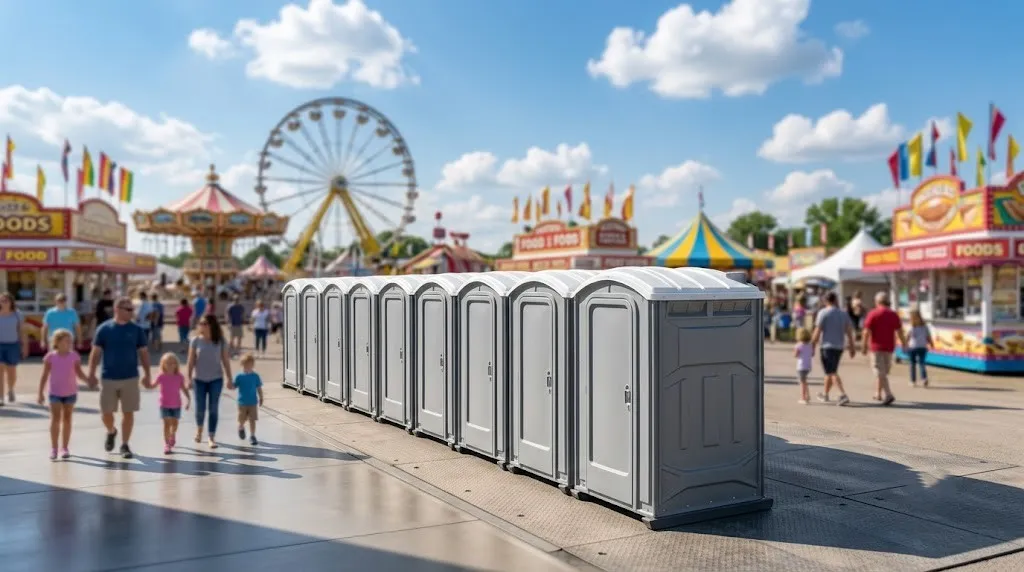
Fair crowds spike hard around meal times and headline events, so the math is different from a steady jobsite crowd. OSHA 1926.51(c) sets construction ratios, but fairs are event crowds, and event planners generally scale well past those minimums to avoid lines. A useful reference point is ANSI/PSAI Z4.3, the portable sanitation service standard, which treats one servicing visit per week for up to 10 steady users over a 40 hour week as the baseline interval, then adjusts up hard for event-day volume. For a one or two day county fair in Poinciana, we count expected daily attendance, count food and beverage vendors separately, and add units near the largest queue points: main gate, grandstand, livestock barns. Standard units run $200 to $800 for a weekend depending on count and add-ons, and we always build in a cushion above the bare minimum because a fair that runs short on a Saturday afternoon does not get a second chance that day. Pair the standard count with at least one deluxe flushable unit near the grandstand for guests who want a hand-wash sink built in, and route temporary fencing so restroom lines do not spill into cart paths or vendor rows.
| unit | duration | typical | notes |
|---|---|---|---|
| standard | weekend | $250 | per unit, gate and midway zones |
| standard | event | $400 | multi-day fair rate, per unit |
| deluxe | weekend | $250 | flush unit near grandstand |
| ada | weekend | $240 | required near every cluster |
| trailer | weekend | $2,000 | VIP or sponsor area |
Do county fairs need ADA-accessible restrooms?
Yes. Anywhere you cluster standard units, ADA Standards section 213.2 requires at least 5 percent of the cluster to be accessible units, with a minimum of one no matter how small the cluster. On a fairground with restrooms spread across the midway, livestock area and grandstand, that means an accessible unit at each cluster, not just one for the whole event. Accessible units need a level, stable approach, since ADA Standards section 302.1 calls for surfaces that are firm and slip resistant, which matters on grass or gravel fairground lots after a Florida afternoon storm. Door clearance matters too: ADA Standards section 404.2.3 sets minimum clear door opening width at 32 inches, and the unit itself needs a 60 inch turning circle inside per ADA Standards section 304.3.1. We place these units on compacted pads near ramps, not tucked behind concession trailers where wheelchairs cant get a straight approach. For fairs with grandstand seating, we typically add a second ADA unit close to the seating exit so it is not a long walk back to the midway cluster. Ask about pairing ADA units with a handwashing station rental at each site, since fairground water access is often limited to a handful of spigots.
What restroom setup works best for a multi-day county fair?
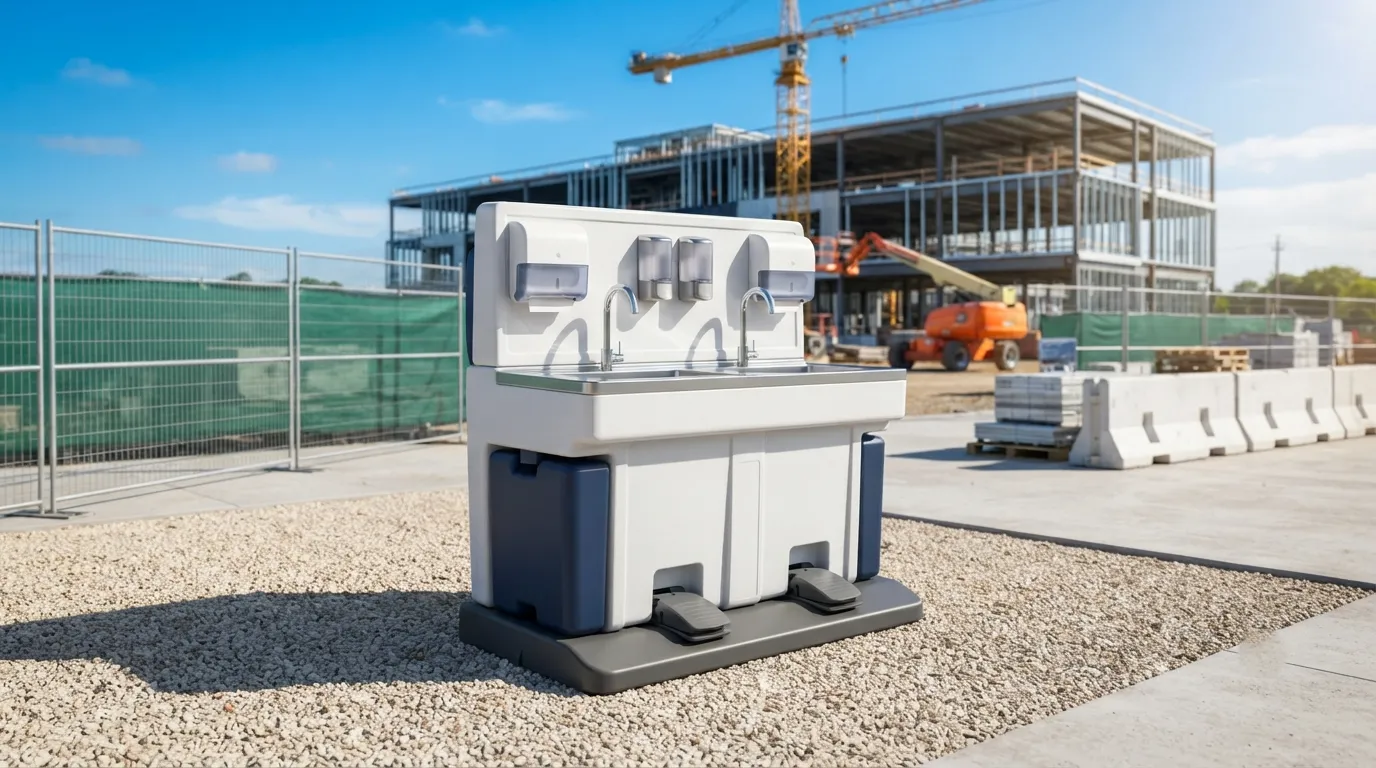
Multi-day fairs need a servicing plan built into the contract, not an afterthought. A fair that runs Thursday through Sunday puts more strain on tanks than a single evening event, so we schedule mid-run servicing visits rather than relying on the standard weekly interval used for steady-state jobsites. Poinciana fairgrounds sites vary in how close a service truck can park, and our trucks generally need clear drive access similar to what a roll-off dumpster delivery requires, about 60 feet of straight clearance, so we walk the site layout before the gates open. We also stage a few extra standard units as flex capacity near food vendor rows, since concession lines and restroom lines tend to spike together. For fairs running food trucks that use fryers or grills, 29 CFR 1910.141(d)(2) requires soap and towels or a hand-drying device at washing stations, not hand sanitizer alone, so we set up dedicated portable sink rental units near the vendor midway rather than just sanitizer stands. Poinciana sits inland from the coast, about 12.6 miles east of Haines City and 13.7 miles south of Campbell, and our trucks route through both corridors depending on where the fairground pull-in sits relative to the highway. If your fair includes a beer garden or gated VIP section, a restroom trailer rental inside that fenced area cuts down on foot traffic crossing back into general midway restrooms, and it pairs well with crowd control barrier rental at the entrance.
How far in advance should I book county fair restrooms?
Book as soon as your gate count estimate firms up, ideally 60 to 90 days out for a multi-day fair. Fair season compresses demand across Poinciana and nearby towns at the same time, and units get committed early. Use our quote form to lock a count before the final layout is set.
Can I get restroom trailers instead of standard units for a county fair?
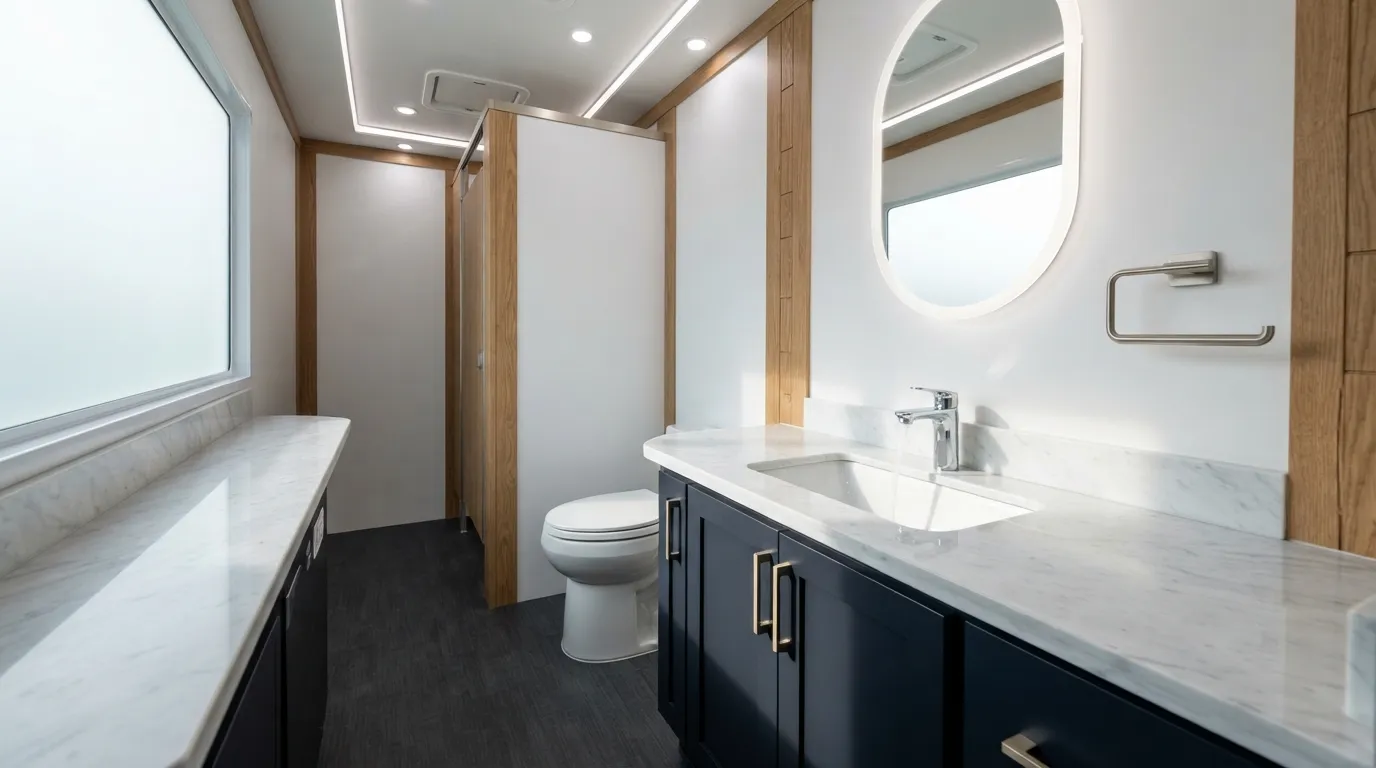
Yes, and many fairs mix both. Standard units handle midway volume cheaply, while a restroom trailer works well for grandstand VIP sections or sponsor areas that want climate control and real sinks.
Do county fair restrooms need lighting at night?
If the fair runs past dusk, yes. OSHA 1926.56(a) sets minimum illumination guidance for work and gathering areas, and we pair restroom clusters with light towers on multi-day evening fairs.
How often are restrooms serviced during a county fair?
More often than a standard weekly interval. Multi-day fairs get servicing built into the contract based on attendance, not the ANSI/PSAI Z4.3 baseline used for steady low-traffic sites.
What is the cost difference between a single-day and multi-day fair restroom order?
Single-day weekend rates run lower per unit than a full multi-day event rate. Check the porta potty rental cost and per-day pricing pages for the full range before you finalize a headcount.
Next step
Get a delivery date
Tell us the address, the dates and the headcount. We size the order and confirm the route.