How many restrooms does a festival need?
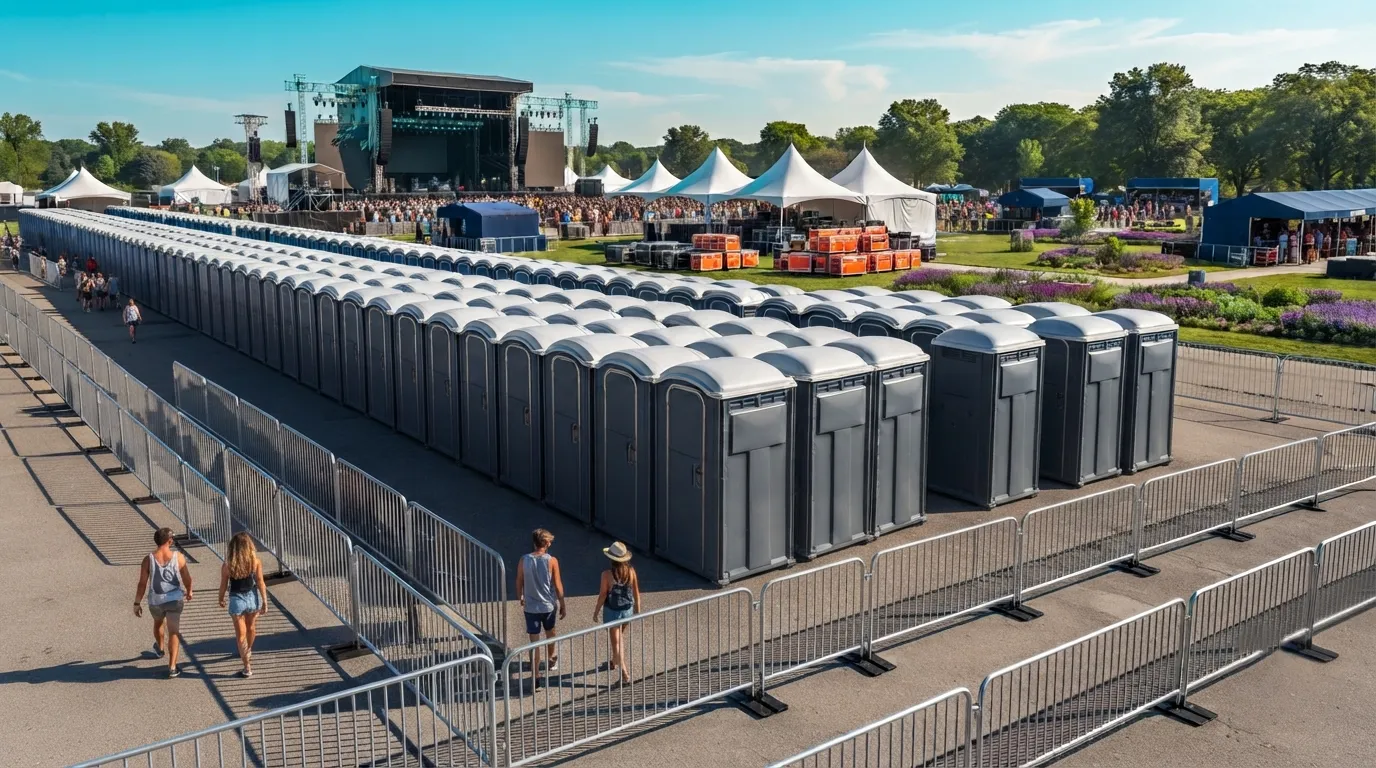
Start with attendance, then adjust for beer tents, food trucks, and how long people stay on site. A standard unit runs 100 to 350 dollars a day depending on volume and delivery distance, and multi-day festivals usually do better on a weekly rate than stacking daily bookings. ANSI/PSAI Z4.3 sets a baseline service interval of one visit per week for up to 10 users over a 40 hour week, but a festival crowd blows past that fast, so we plan extra servicing into single-day and weekend events rather than relying on the standard interval. For crowds heavy on alcohol, we usually push higher than the bare OSHA worker ratio in 1926.51(c), since that standard was written for job sites, not gate counts. If your event runs a beer garden or dance floor rather than a construction crew, our festival planning guide walks through the math event by event. ADA Standards 213.2 requires that at least 5 percent of clustered single-user units be accessible, never fewer than one, so a 12-unit bank still needs a dedicated ADA-accessible unit near the main path. We also route handwashing stations near food vendors, since food handling brings its own expectations that plain sanitizer stations do not meet under 29 CFR 1910.141(d)(2), which requires soap and towels or a hand-drying device. For a headline stage or VIP area, a restroom trailer upgrades the experience without changing your footprint much.
What restroom options work for a festival?
Most Poinciana festivals mix unit types by zone: standard units for the general grounds, a deluxe flushable unit or two near sponsor tents, and a restroom trailer or 4-stall trailer for ticketed or VIP sections. A standard unit sits about 44 by 48 inches on the ground and stands roughly 92 inches tall, so it fits tight festival footprints without eating walkway space. For larger draws, an 8-stall trailer handles the line pressure that a single bank of standards cannot. Every ADA unit needs the clear route width required by ADA Standards 403.5.1, a minimum 36 inches, and a door opening of at least 32 inches under ADA Standards 404.2.3, plus a 60 inch turning circle per ADA Standards 304.3.1 for wheelchair users. We check placement against ADA Standards 302.1, which requires stable, firm, slip-resistant ground, since festival grounds around Poinciana often mean grass or gravel lots that need matting or leveling before delivery. Loading in a roll-off dumpster for vendor waste and a temporary fence line around generator and restroom clusters rounds out most site plans. If your event runs after dark, ask about a light tower near the restroom bank; a dark path to the toilets is the fastest way to get complaints. Weekend festival rates for a standard unit typically land in the 125 to 400 dollar range depending on service frequency and crowd size, which we can confirm once we know your gate count and vendor layout.
Where should festival restrooms go on site?
Placement decides whether your restroom bank works or becomes the bottleneck people complain about online. Units belong near high-traffic paths but outside sightlines to the main stage, with a clear 60 feet of straight clearance for delivery trucks servicing roll-off or trailer units. We route accessible units along the same paved or matted path used for ADA parking and drop-off, keeping travel distance short for anyone using a wheelchair or walker. Placement in the public right of way needs confirming with the City of Poinciana before you finalize your site map; we do not guess at that rule and neither should your event permit application. For festivals near Grenelefe, about 12.1 miles southwest of central Poinciana, or events pulling crowds from Haines City, 12.6 miles west, we factor drive time into delivery scheduling so units land before gates open, not during load-in chaos. Multi-day festivals should also plan a servicing schedule tighter than the ANSI/PSAI Z4.3 weekly baseline, since a three-day event with thousands of attendees generates far more use than that standard assumes. Our placement guide covers ground stability, sightlines, and vendor coordination in more depth, and our event restroom page breaks down options by event type, from weddings to concerts to full-scale county fairs.
How far in advance should I book festival restrooms?
Book as soon as your date and expected attendance are set, ideally 4 to 6 weeks out for larger festivals. Peak season fills fast, and last-minute orders often mean fewer unit choices or a rushed emergency delivery instead of a planned one.
Can I add handwashing stations to a festival restroom order?
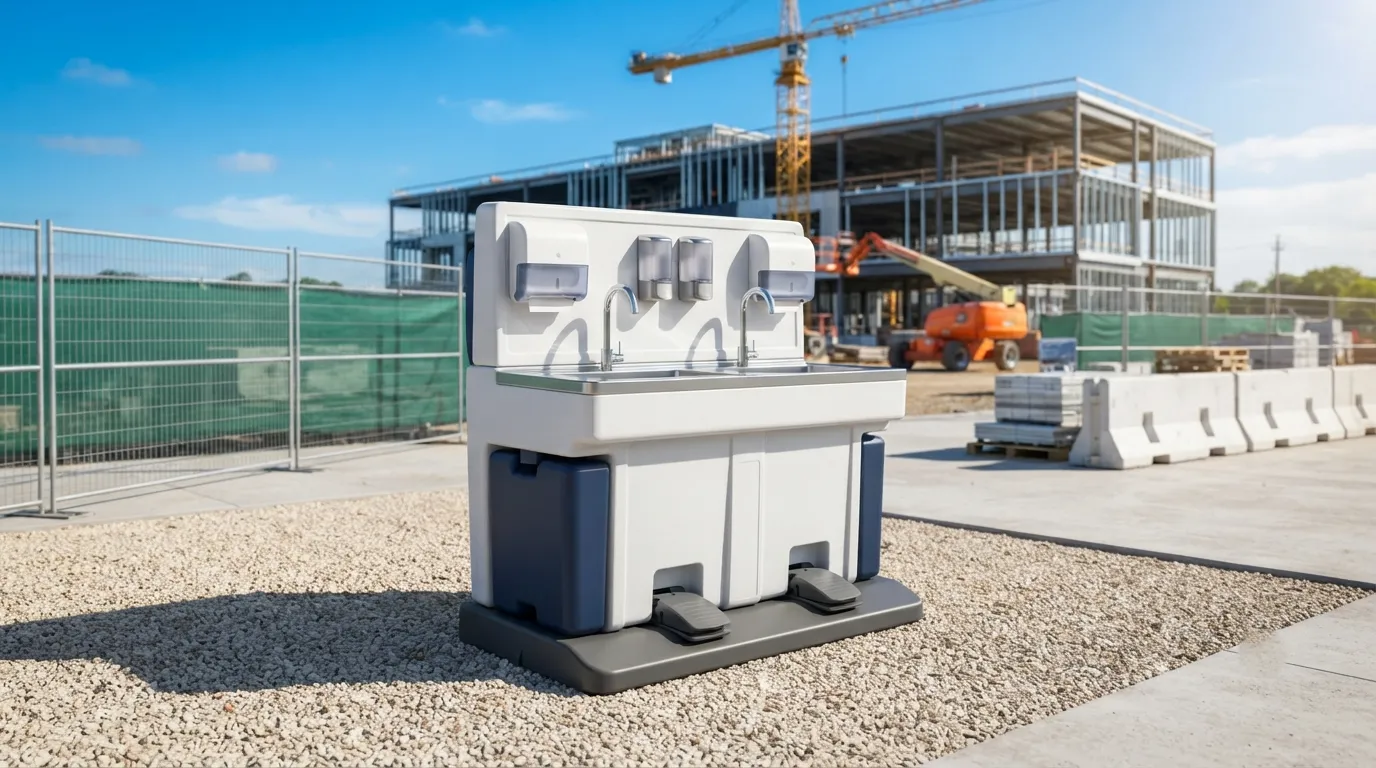
Yes. Most festival orders pair restroom units with handwashing stations near food vendors and exits. Under 29 CFR 1910.141(d)(2), stations need soap and towels or a hand-drying device, since sanitizer alone does not meet that standard.
Do festivals need ADA-accessible units even for one-day events?
Yes, one-day events still need accessible units. ADA Standards 213.2 requires at least 5 percent of clustered units be accessible, never fewer than one, regardless of event length.
What happens if my festival runs longer than expected?
Call us and we adjust servicing on the spot. Multi-day and extended festivals often need mid-event pumping beyond the standard interval, and we build flexibility into the schedule for exactly that.
Can I get a restroom trailer for a VIP or sponsor area?
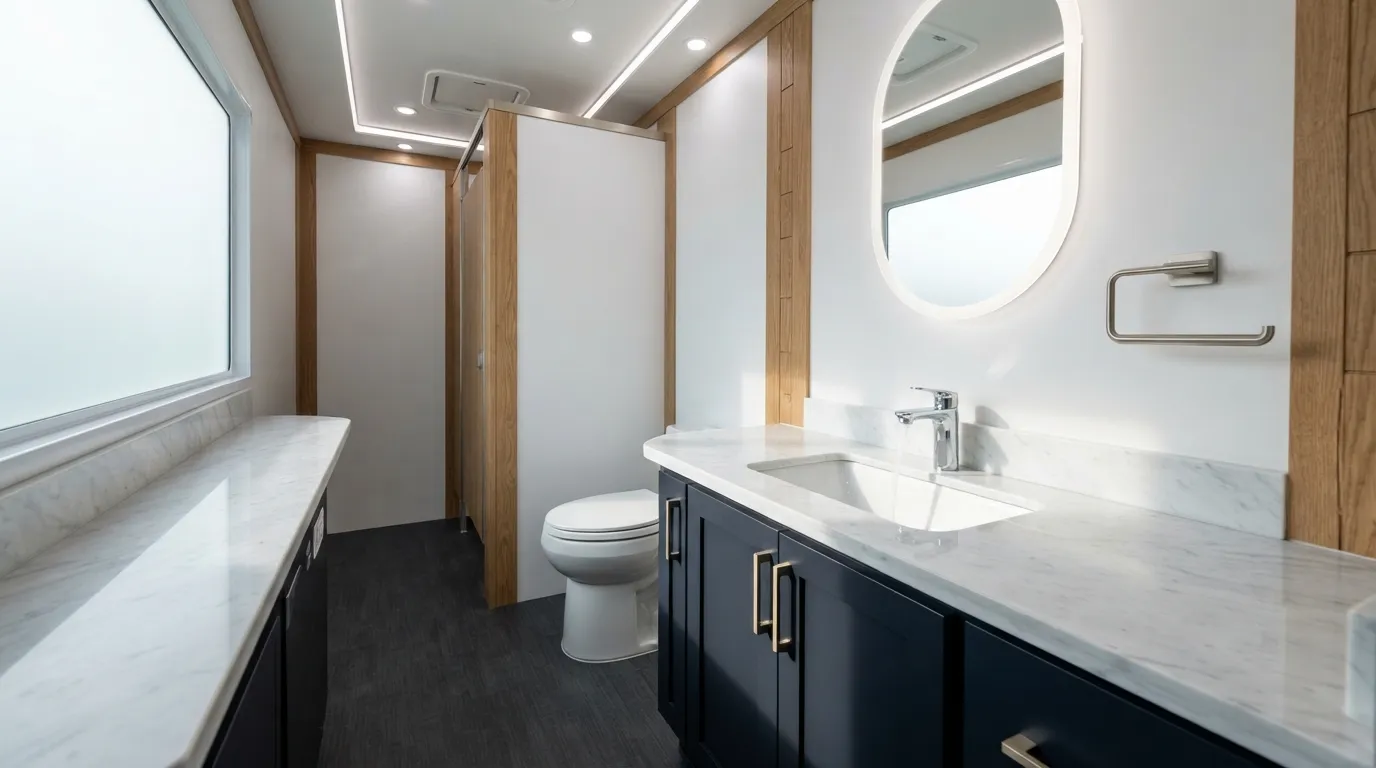
Yes. A restroom trailer or luxury trailer works well for VIP zones, giving sponsors and talent a step up from standard units without complicating your main restroom bank layout.
Next step
Get a delivery date
Tell us the address, the dates and the headcount. We size the order and confirm the route.