How many restrooms does a race route need?
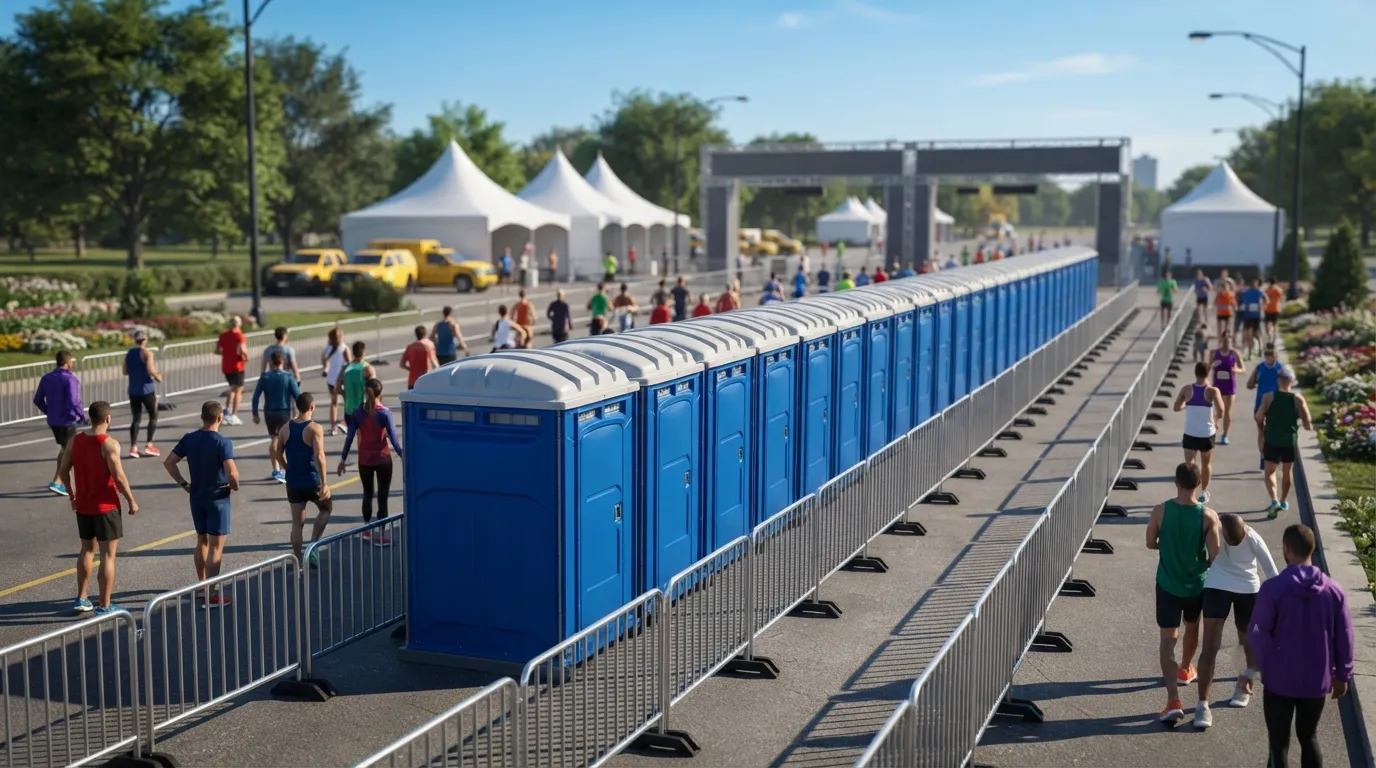
Course length and runner count both drive the number. A half marathon with 500 entrants spread across a 13 mile loop needs restrooms at the start, somewhere near the midpoint, and again at the finish, not just clustered at one spot. How Many Porta Potties Do I Need walks through the math in more detail, but the short version: race organizers in Poinciana usually land between 8 and 15 standard units for a mid-size field, scaled up for heat, hydration stations, and expected finish-line dwell time.
Pricing runs on a per-unit, per-day basis for single-day events, and Poinciana Porta Pros prices standard porta potty rentals inside the bands below.
| unit | duration | typical price |
|---|---|---|
| standard | event | $400 |
| ada | day | $230 |
| deluxe | day | $300 |
At least one accessible unit belongs in every cluster, per ADA Standards section 213.2, which requires 5 percent of clustered single-user toilets to be accessible with never fewer than one. Every accessible unit needs a 60 inch turning circle inside per ADA Standards section 304.3.1, and the door opening has to clear 32 inches under ADA Standards section 404.2.3. If your race draws runners from Haines City, 12.6 miles west, or Davenport, 16.9 miles west, ground surfaces at each stop need to stay stable and firm per ADA Standards section 302.1, especially on grass staging areas. See ADA accessible porta potty rentals and the broader ADA restroom requirements guide for full spacing rules.
Where should restrooms go along a marathon course?
Restrooms belong at the start corral, the midpoint aid station, and the finish chute, spaced so no runner walks more than a few minutes off course. Bunching every unit at the start line looks efficient on paper and fails on race day, because runners still need a stop at mile 8. The porta potty placement guide covers ground clearance and setback distances your event planner should confirm with the venue.
Race organizers running events that span Poinciana and pull crowds from Grenelefe, 12.1 miles southwest, or Campbell, 13.7 miles north, often add temporary fencing around restroom clusters to manage crowd flow at the finish. A crowd control barrier rental paired with restroom stations keeps lines organized instead of spilling into the course. If your race runs after dark or starts before sunrise, a light tower rental at each restroom cluster helps volunteers and medical staff find their way, and illumination minimums for work areas are set out in OSHA 1926.56(a).
Power matters too. Timing tents, PA systems, and lit signage at restroom stations often run off a temporary power pole rather than a generator at each stop. How to brace a temporary power pole comes down to a stable base plate anchored on firm, level ground, away from the runner lane and clear of any fence line, with guy wires staked wide enough that a gust or a stray elbow at mile marker six doesn't tip it. Any temporary electrical setup on course should carry ground fault circuit interrupter protection per OSHA 1926.404(b)(1)(ii).
When should race restrooms be delivered and serviced?
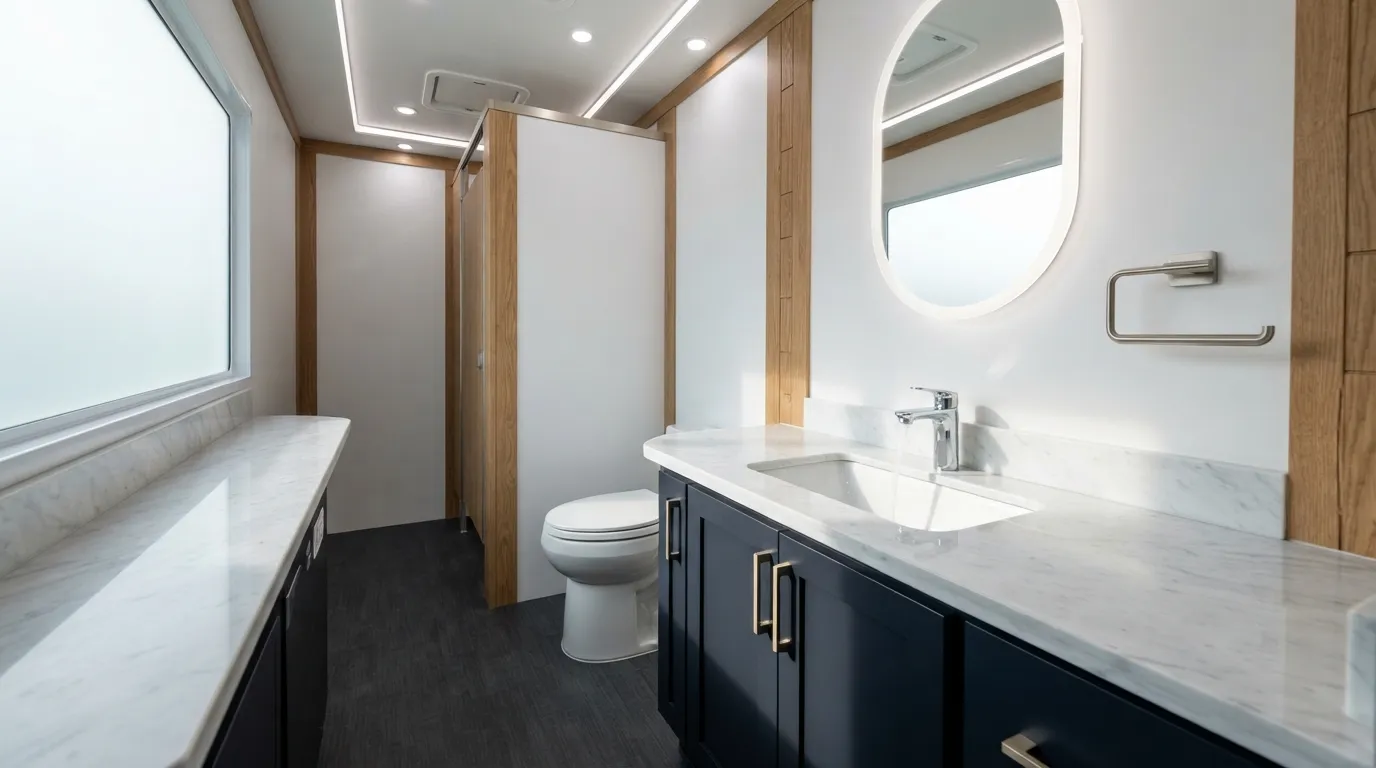
Delivery should happen the day before or early on race morning, with a mid-event service check for any race running longer than four hours or drawing more than a few hundred runners. Poinciana Porta Pros schedules delivery trucks with roughly 60 feet of straight clearance in mind, which matters for larger events pairing restrooms with a restroom trailer rental at the finish line for VIP runners or timing staff.
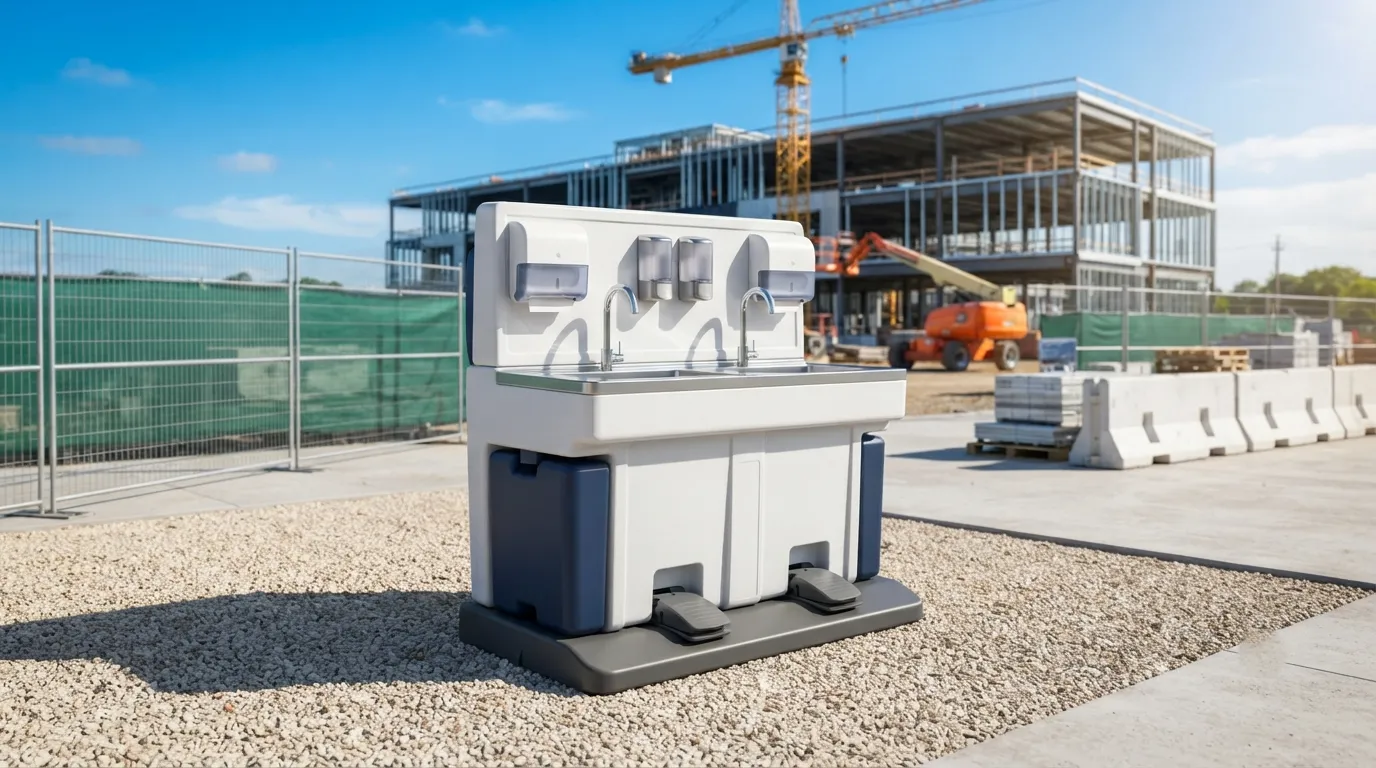
Service intervals matter more on race day than they do on a construction site. ANSI/PSAI Z4.3 sets a baseline of one service visit per week for units seeing up to 10 users over a standard 40 hour week, but a marathon can push hundreds of uses through a single unit in a few hours. That is why Poinciana Porta Pros stages extra units rather than relying on a mid-race pump-out. Every unit also needs an adequate water supply under OSHA 1926.51(a)(1), and any handwashing or sanitizer stations at aid stations should follow handwashing station requirements, since 29 CFR 1910.141(d)(2) requires actual soap and towels, not just sanitizer, wherever washing facilities are provided.
For multi-day festivals built around the race weekend, see event restroom rental and festival restroom rental for layouts that carry over from race day into vendor and concert areas.
How many porta potties does a 500-runner race need?
Plan on 8 to 10 standard units plus one ADA unit for a 500-runner field, split across start, midpoint, and finish. Larger fields or hot-weather races push that number up. See how many porta potties do I need for the full breakdown by runner count.
Does a marathon need an accessible restroom?
Yes. ADA Standards section 213.2 requires at least one accessible unit in any cluster of portable toilets, even a small one. Races with wheelchair divisions or accessible viewing areas should add more than the minimum.
Can restrooms be delivered before sunrise for an early start?
Yes, Poinciana Porta Pros can deliver before dawn for early race starts. Confirm truck access and about 60 feet of straight clearance at each drop point when you book through request a quote.
What is the cost difference between daily and event-rate restrooms?
Standard units run on an event rate for race-day bookings, distinct from the daily rate used on job sites. Check porta potty rental cost for how event pricing compares to standard day rates.
Do race restrooms need handwashing stations too?
Most race organizers add handwashing stations near aid stations and finish-line food areas. See handwashing station rental for setup options that pair with restroom clusters.
Next step
Get a delivery date
Tell us the address, the dates and the headcount. We size the order and confirm the route.